Friday, 4 April 2014

TFE Intro on Mike Norman's Influential Blog


http://mikenormaneconomics.blogspot.co.uk/2014/03/robert-searle-transfinancial-economics.html Ref Link


Saturday, March 22, 2014

Robert Searle — Transfinancial Economics

Transfinancial Economics (TFE) is an evolving project nearing basic completion. It should be said that there has been a degree of interest in it from a number of people with economic backgrounds such as Warren Mosler, Andy Dennis, Stephen Monrad, David Axelrod, Trond Andresen (cybernetics expert), Prem Sikka, and the noted autodidact, and futurist Hazel Henderson. In April 2010, TFE was also a subject discussed at a major scientific conference (the ICEME, or International Conference of Engineering, and Meta-Engineering, Florida, USA).
It is important to add that TFE regards the financial system as a huge global IT system, and recognizes the reality that virtually all money exists as electronic,or digital data transmitted from one bank account to another.This means that the free flow of capital can be tracked, and controlled if necessary.
It must be said that the serious, and full development of TFE will require the help of "open minded" experts notably in the fields of economics, the law, and computer science.

Please note that the following may be subject to changes, and possible corrections. It is still a "work in progress" project. Also, the Kheper presentation on TFE which crops up on the google search engine is out of date, and not fully authorative. It may be replaced, or deleted fairly soon.
 Weekend reading for your consideration. Something along these lines is the wave of the future in the digital age aka information age, and the knowledge revolution. Robert Searle present his vision and a path for getting from here to there.

P2P Foundation
Transfinancial Economics
Project by Robert Searle

Here and here are my comments at heteconomist.

  1. Good work, Robert. My own vision is that a full-on information economy will develop over time that eliminates the social, political and economic structure as we know it. It will be a command economy run by AI in an environment of unlimited essentially free sustainable energy. There is no limitation on money creation, as we know. The limitation is real resources, and the chief limitation wrt real resources is energy. Overcoming that is on the horizon. Solar power is already freely available and unlimited, and the technology for harnessing it already surging forward. Fusion now seems to be a possibility, too. The problem then is heat-dissipation.
    As far as other resources go, Bucky Fuller addressed this many decades ago with is vision of design science, the foundation of which is doing more with less. He compared the development of land architecture > naval architecture > aircraft architecture > rocket ship architecture, for example.
    The question is getting from here to there and your proposal takes that into consideration. We need to start implementing the changes we can as it becomes possible and practically speaking, this likely involves a lot more gradualism than ideal owing to vested interests and the prevailing mindset, i.e., the level of collective consciousness.
    MMT is a just a baby-step in the direction of the economic potential of a globalized humanity. As we enter the digital age and the knowledge revolution the pace of change is picking up speed and promises to accelerate exponentially.
    Transfinancial Economics advances the debate considerably beyond where it is stuck now by proposing the outlines of a vision for future development and a path for actualizing it. We need to be thinking along these lines, which is just taking advantage of the potential that is already available instead of operating as if we lived in the 19th century, which is where neoclassical economics places us.
  2. BTW, the distinction between a free market economy and a command economy is pretty much a canard based on the (supposed) failure of communism owing to their adoption of command economies. As Keynes pointed out to Hayek in comments on The Road to Serfdom, planning is more efficient than letting nature takes its course. This was before the digital age had dawned. Hayek wrote is “The Uses of Knowledge in Society” around this time, too, basically claiming that free markets could perform economic calculation superior to human capabilities. Even if that claim were true at the time — it wasn’t, but that’s another story — conditions have changed dramatically since then and promise to change even more dramatically going forward.
    Humanity has not progressed by leaving its development to nature but rather has used human intelligence to shape its future. It’s worked pretty well for us in comparison to other species. Looking to nature to do our calculating for us is looking backward rather than forward, especially now that the means to calculate on a vaster scale have been developed and are still developing quickly with no end in sight. Development in the industrial age was slow and limited in comparison.
    Compare the development of digital technology to automobile engineering, for example. Cars have gotten a bit faster, a lot more reliable, and a somewhat more fuel efficient over the past century. I was just talking to s.o. today about advances in digital technology. She used to program an IBM mainframe in the Sixties. It’s core was 256k. Compare that to an iPad today.

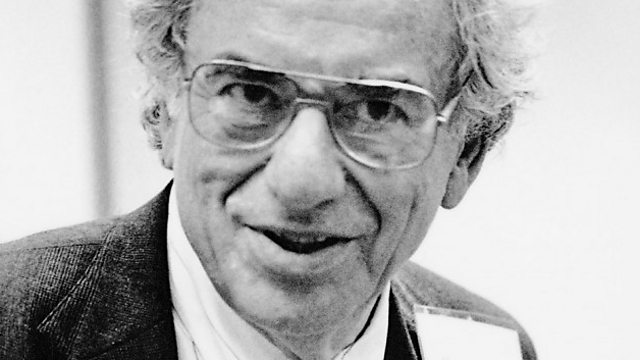
Hyman Philip Minksy

    Image for Why Minsky Matters


    American economist Hyman Minsky died in 1996, but his theories offer one of the most compelling explanations of the 2008 financial crisis. His key idea is simple enough to be a t-shirt slogan: "Stability is destabilising". But TUC senior economist Duncan Weldon argues it's a radical challenge to mainstream economic theory. While the mainstream view has been that markets tend towards equilibrium and the role of banks and finance can largely be ignored, Minsky argued that in the good times the seeds of the next crisis are sown as the financial sector engages in riskier and riskier lending in pursuit of profit. In the aftermath of the financial crisis, this might seem obvious - so why did Minsky die an outsider? What do his ideas say about the response to the 2008 crisis and current policies like Help to Buy? And has mainstream economics done enough to respond to its own failure to predict the crisis and the challenge posed by Minsky's ideas?


    Ref Link to Radio 4 programme of the above


    The following is the Wikipedia presentation of Minsky.


    From Wikipedia, the free encyclopedia
    Jump to: navigation, search
    Hyman Philip Minsky
    Post-Keynesian economics
    Born(1919-09-23)September 23, 1919
    Chicago, Illinois
    DiedOctober 24, 1996(1996-10-24) (aged 77)
    Rhinebeck, New York
    NationalityUnited States
    FieldMacroeconomics
    Alma materUniversity of Chicago (B.S.)
    Harvard University (M.P.A./Ph.D.)
    InfluencesHenry Simons
    Joseph Schumpeter
    Wassily Leontief
    Michał Kalecki
    John Maynard Keynes
    Irving Fisher
    Abba Lerner
    InfluencedLaurence Meyer
    Paul McCulley
    Steve Keen
    Stephany Griffith-Jones
    Paul Krugman
    Lars Pålsson Syll
    ContributionsFinancial instability hypothesis
    Minsky moment
    Hyman Philip Minsky (September 23, 1919 – October 24, 1996) was an American economist, a professor of economics at Washington University in St. Louis, and a distinguished scholar at the Levy Economics Institute of Bard College. His research attempted to provide an understanding and explanation of the characteristics of financial crises, which he attributed to swings in a potentially fragile financial system. Minsky is sometimes described as a post-Keynesian economist because, in the Keynesian tradition, he supported some government intervention in financial markets, opposed some of the financial deregulation policies popular in the 1980s, stressed the importance of the Federal Reserve as a lender of last resort and argued against the over-accumulation of private debt in the financial markets.[1]


    Education[edit]

    A native of Chicago, Illinois, Minsky was born into a family of Menshevik emigrants from Belarus. His mother, Dora Zakon, was active in the nascent trade union movement; his father, Sam Minsky, was active in the Jewish section of the Socialist party of Chicago.[2] In 1937, Minsky graduated from George Washington High School in New York City. In 1941, Minsky received his B.S. in mathematics from the University of Chicago and went on to earn an M.P.A. and a Ph.D. in economics from Harvard University, where he studied under Joseph Schumpeter and Wassily Leontief.

    Career[edit]

    Minsky taught at Brown University from 1949 to 1958, and from 1957 to 1965 was an Associate Professor of Economics at the University of California, Berkeley. In 1965 he became Professor of Economics of Washington University in St Louis and retired from there in 1990.[3] At the time of his death he was a Distinguished Scholar at the Levy Economics Institute of Bard College.

    Commission on Money and Credit (1957–1961)[edit]

    Minsky was a consultant to the Commission on Money and Credit while he was an Associate Professor of Economics at the University of California, Berkeley.

    Financial theory[edit]

    Minsky proposed theories linking financial market fragility, in the normal life cycle of an economy, with speculative investment bubbles endogenous to financial markets. Minsky claimed that in prosperous times, when corporate cash flow rises beyond what is needed to pay off debt, a speculative euphoria develops, and soon thereafter debts exceed what borrowers can pay off from their incoming revenues, which in turn produces a financial crisis. As a result of such speculative borrowing bubbles, banks and lenders tighten credit availability, even to companies that can afford loans, and the economy subsequently contracts.
    This slow movement of the financial system from stability to fragility, followed by crisis, is something for which Minsky is best known, and the phrase "Minsky moment" refers to this aspect of Minsky's academic work.
    "He offered very good insights in the '60s and '70s when linkages between the financial markets and the economy were not as well understood as they are now," said Henry Kaufman, a Wall Street money manager and economist. "He showed us that financial markets could move frequently to excess. And he underscored the importance of the Federal Reserve as a lender of last resort."[4]
    Minsky's model of the credit system, which he dubbed the "financial instability hypothesis" (FIH),[5] incorporated many ideas already circulated by John Stuart Mill, Alfred Marshall, Knut Wicksell and Irving Fisher.[6] "A fundamental characteristic of our economy," Minsky wrote in 1974, "is that the financial system swings between robustness and fragility and these swings are an integral part of the process that generates business cycles."[7]
    Disagreeing with many mainstream economists of the day, he argued that these swings, and the booms and busts that can accompany them, are inevitable in a so-called free market economy – unless government steps in to control them, through regulation, central bank action and other tools. Such mechanisms did in fact come into existence in response to crises such as the Panic of 1907 and the Great Depression. Minsky opposed the deregulation that characterized the 1980s.
    It was at the University of California, Berkeley that seminars attended by Bank of America executives helped him to develop his theories about lending and economic activity, views he laid out in two books, John Maynard Keynes (1975), a classic study of the economist and his contributions, and Stabilizing an Unstable Economy (1986), and more than a hundred professional articles.

    Further developments[edit]

    Minsky's theories have enjoyed some popularity, but have had little influence in mainstream economics or in central bank policy.
    Minsky stated his theories verbally, and did not build mathematical models based on them. Consequently, his theories have not been incorporated into mainstream economic models, which do not include private debt as a factor. The post-Keynesian economist Steve Keen has recently developed models of endogenous economic crises based on Minsky's theories, but they are currently at the research stage and do not enjoy widespread use.[8]
    Minsky's theories, which emphasize the macroeconomic dangers of speculative bubbles in asset prices, have also not been incorporated into central bank policy. However, in the wake of the financial crisis of 2007–2010 there has been increased interest in policy implications of his theories, with some central bankers advocating that central bank policy include a Minsky factor.[9]

    Minsky's theories and the subprime mortgage crisis[edit]

    Understanding Minsky's financial instability hypothesis[edit]

    Hyman Minsky's theories about debt accumulation received revived attention in the media during the subprime mortgage crisis of the late 2000s.[10]
    Minsky argued that a key mechanism that pushes an economy towards a crisis is the accumulation of debt by the non-government sector. He identified three types of borrowers that contribute to the accumulation of insolvent debt: hedge borrowers, speculative borrowers, and Ponzi borrowers.
    The "hedge borrower" can make debt payments (covering interest and principal) from current cash flows from investments. For the "speculative borrower", the cash flow from investments can service the debt, i.e., cover the interest due, but the borrower must regularly roll over, or re-borrow, the principal. The "Ponzi borrower" (named for Charles Ponzi, see also Ponzi scheme) borrows based on the belief that the appreciation of the value of the asset will be sufficient to refinance the debt but could not make sufficient payments on interest or principal with the cash flow from investments; only the appreciating asset value can keep the Ponzi borrower afloat.
    If the use of Ponzi finance is general enough in the financial system, then the inevitable disillusionment of the Ponzi borrower can cause the system to seize up: when the bubble pops, i.e., when the asset prices stop increasing, the speculative borrower can no longer refinance (roll over) the principal even if able to cover interest payments. As with a line of dominoes, collapse of the speculative borrowers can then bring down even hedge borrowers, who are unable to find loans despite the apparent soundness of the underlying investments.[5]

    Applying the hypothesis to the subprime mortgage crisis[edit]

    Economist Paul McCulley described how Minsky's hypothesis translates to the subprime mortgage crisis.[11] McCulley illustrated the three types of borrowing categories using an analogy from the mortgage market: a hedge borrower would have a traditional mortgage loan and is paying back both the principal and interest; the speculative borrower would have an interest-only loan, meaning they are paying back only the interest and must refinance later to pay back the principal; and the ponzi borrower would have a negative amortization loan, meaning the payments do not cover the interest amount and the principal is actually increasing. Lenders only provided funds to ponzi borrowers due to a belief that housing values would continue to increase.
    McCulley writes that the progression through Minsky's three borrowing stages was evident as the credit and housing bubbles built through approximately August 2007. Demand for housing was both a cause and effect of the rapidly-expanding shadow banking system, which helped fund the shift to more lending of the speculative and ponzi types, through ever-riskier mortgage loans at higher levels of leverage. This helped drive the housing bubble, as the availability of credit encouraged higher home prices. Since the bubble burst, we are seeing the progression in reverse, as businesses de-leverage, lending standards are raised and the share of borrowers in the three stages shifts back towards the hedge borrower.
    McCulley also points out that human nature is inherently pro-cyclical, meaning, in Minsky's words, that "from time to time, capitalist economies exhibit inflations and debt deflations which seem to have the potential to spin out of control. In such processes, the economic system's reactions to a movement of the economy amplify the movement – inflation feeds upon inflation and debt-deflation feeds upon debt deflation." In other words, people are momentum investors by nature, not value investors. People naturally take actions that expand the high and low points of cycles. One implication for policymakers and regulators is the implementation of counter-cyclical policies, such as contingent capital requirements for banks that increase during boom periods and are reduced during busts.

    Views on John Maynard Keynes[edit]

    In his book John Maynard Keynes (1975), Minsky criticized the neoclassical synthesis' interpretation of The General Theory of Employment, Interest and Money. He also put forth his own interpretation of the General Theory, one which emphasized aspects that were de-emphasized or ignored by the neoclassical synthesis, like Knightian uncertainty.

    Selected publications[edit]

    See also[edit]

    Notes and references[edit]

    1. Jump up ^ Uchitelle, Louis (October 26, 1996). "H. P. Minsky, 77, Economist Who Decoded Lending Trends". New York Times. 
    2. Jump up ^ A biographical dictionary of dissenting economists. books.google.com. 2000. ISBN 9781858985602. Retrieved 2009-11-08. 
    3. Jump up ^ Hyman Minsky, professor emeritus of economics. Washington University in St. Louis.
    4. Jump up ^ Uchitelle, Louis (October 26, 1996). "H. P. Minsky, 77, Economist Who Decoded Lending Trends". The New York Times. Retrieved May 4, 2010. 
    5. ^ Jump up to: a b The Financial Instability Hypothesis by Hyman P. Minsky, Working Paper No. 74, May 1992, pp. 6-8
    6. Jump up ^ pg. 14, Manias, Panics, and Crashes, 4th Ed. by Charles P. Kindleberger
    7. Jump up ^ Minsky, Hyman P. (1974). "The Modeling of Financial Instability: An introduction". Modeling and Simulation. Proceedings of the Fifth Annual Pittsburgh Conference 5. 
    8. Jump up ^ Are we "It" yet?, by Steve Keen, Associate Professor in economics and finance at the University of Western Sydney, July 3rd, 2010
    9. Jump up ^ A Minsky Meltdown: Lessons for Central Bankers, by Janet L. Yellen, President and CEO, Federal Reserve Bank of San Francisco, April 16, 2009
    10. Jump up ^ The Credit Crisis: Denial, delusion and the "defunct" American economist who foresaw the dénouement
    11. Jump up ^ McCulley-PIMCO-The Shadow Banking System and Hyman Minsky's Economic Journey

    Further reading[edit]

    External links[edit]

    The Zero Marginal Cost Society


    Source Ref Amazon, and P2P Foundation


    * Book: The Zero Marginal Cost Society: The Internet of Things, the Collaborative Commons, and the Eclipse of Capitalism. by Jeremy Rifkin. Palgrave Macmillan, 2014
    URL = [1]
    Blogger Reference Link http://www.p2pfoundation.net/Transfinancial_Economics


    Description

    "In The Zero Marginal Cost Society, New York Times bestselling author Jeremy Rifkin argues that the capitalist era is passing—not quickly, but inevitably. The emerging Internet of Things is giving rise to a new economic system—the Collaborative Commons—that will transform our way of life.
    In his provocative new book, The Zero Marginal Cost Society, Mr. Rifkin argues that the coming together of the Communication Internet with the fledgling Energy Internet and Logistics Internet in a seamless 21st century intelligent infrastructure—the Internet of Things—is boosting productivity to the point where the marginal cost of producing many goods and services is nearly zero, making them essentially free. The result is corporate profits are beginning to dry up, property rights are weakening, and the conventional mindset of scarcity is slowly giving way to the possibility of abundance. The zero marginal cost phenomenon is spawning a hybrid economy—part capitalist market and part Collaborative Commons—with far reaching implications for society.
    Rifkin describes how hundreds of millions of people are already transferring parts of their economic lives from capitalist markets to what he calls the global “Collaborative Commons.” “Prosumers” are making and sharing their own information, entertainment, green energy, and 3-D printed products at near zero marginal cost. They are also sharing cars, homes, clothes and other items via social media sites, rentals, redistribution clubs, and cooperatives at low or near zero marginal cost. Students are even enrolling in free massive open online courses (MOOCs) that operate at near zero marginal cost. And young social entrepreneurs are establishing ecologically sensitive businesses using crowdfunding as well as creating alternative currencies in the new sharing economy. In this new world, social capital is as important as finance capital, access trumps ownership, cooperation supersedes competition, and “exchange value” in the capitalist marketplace is increasingly replaced by “sharable value” on the Collaborative Commons.
    Rifkin concludes that while capitalism will be with us for the foreseeable future, albeit in an increasingly diminished role, it will not be the dominant economic paradigm by the second half of the 21st Century. We are, Rifkin says, entering a world beyond markets where we are learning how to live together in an increasingly interdependent global Collaborative Commons."


    Manchester University move to scrap banking crash module angers students


    Manchester University students

    Course leaders cancelled the Bubbles, Panics and Crashes module developed as counterpoint to free-market teaching


    Joe Earle, front and centre, says students are upset by what they believe are the university’s attempts to obstruct teaching of alternative economic perspectives. Photograph: John Super

    Manchester University bosses came under fire from angry economics students after they scrapped a groundbreaking course that examined the effects of the 2008 banking crash.
    In an escalation of the crisis gripping university economics departments, the course leaders cancelled the Bubbles, Panics and Crashes module developed to answer protests at the dominance of orthodox free-market teaching.

    Students said the U-turn undermined the credibility of senior staff who promised reforms and meant the department was actively obstructing debate over the causes of the financial crash and why economists failed to see it coming.
    Next week, they will hold a day of debates to run alongside the Royal Economic Society’s annual conference, which is held over three days at Manchester University. A manifesto for reform – The Revolution in Economics – will also be published with a foreword by Andy Haldane, the Bank of England’s director of financial stability.
    The row broke out last year when students claimed that mainstream economic teaching failed to address the underlying causes of the banking crash, and was in part responsible for politicians and financial watchdogs relying on free-market theories and light-touch regulation.
    Undergraduates in Manchester formed the Post-Crash Economics Society and joined groups at the London School of Economics, Cambridge University and University College London to rebel against what they saw as the dominance of discredited theories that rely on mathematical formulas and not real-world examples.
    In response, several university departments agreed to implement a new curriculum that would incorporate a wider range of viewpoints, including Keynesian economic thinking. Sponsored by the Institute for New Economic thinking, based in New York, the Curriculum in Open-source Resources in Economics project was set up to develop “a new approach to economics teaching for undergraduates”.
    Manchester University’s economics department, which faced the brunt of student criticism, went further when it agreed to run the Bubbles, Panics and Crashes course. The decision to close it down after only one year has dismayed students.
    A Manchester University spokesman said: “Our students have been leading a national debate on the way economics is taught in higher education, and the ensuing debate has been positive, useful and informative in terms of our extensive consultation with key stakeholders, including students.
    “We have decided not to run the Bubbles, Panics and Crashes module next academic year, but will launch other new economics-run modules to address broader areas of the economics curriculum. These include a new module on economics for public policy led by the renowned and newly appointed professor Diane Coyle and a module on behavioural economics. Students will also now be able to take a second-year module on the financial crisis offered by Manchester Business School and two third-year modules on global capitalism by the politics department.
    “Looking further ahead, economics is exploring the possibility of running a module on alternative economic theories from 2015 to 2016.”
    Coyle, who runs a consultancy and is the author of The Economics of Enough: How to Run the Economy as if the Future Matters, is writing some of the Core curriculum, which she is expected to teach when she joins the university.
    Joe Earle, a spokesman for the Post-Crash Economics Society and a final-year undergraduate, said the new courses and Coyle’s appointment showed that the university was responding to student and employer concerns about the lack of “real-world application” in economics education.
    “However, its decision to reject Bubbles, Panics and Crashes shows that it is actively obstructing attempts to provide optional modules that teach students about alternative economic perspectives such as institutional, post-Keynesian and Austrian economics.
    “This does nothing to reverse the elevation of one school of thought to be the sole object of study in economics and means that the assumptions, methodology and values of what we are taught are not in question. We are simply taught the ‘scientific’ way to do economics.”

    George Soros‘ INET: An institute to improve the world or a Trojan horse of the financial oligarchy?

    March 25, 2014
    from Norbert Haering / Real World Economics Review Blog/Blogger Reference Link http://www.p2pfoundation.net/Transfinancial_Economics


    Let’s assume that there is a financial oligarchy which exerts strong political influence due to the vast amounts of money it controls. Let’s further assume that this financial oligarchy has succeeded in having financial markets deregulated and that this has enabled the financial industry to expand their business massively. Then, in some near or far future, their artfully constructed financial edifice breaks down, because it cannot be hidden any more that the accumulated claims cannot be serviced by the real economy That might be due, for example, to millions of people having bought overly expensive houses on credit without having the income necessary to service this debt. This is the kind of situation we are interested in.
    If such a situation occurs, the leading figures of that financial oligarchy might recall that there has been a financial crisis in the 1930s of similar origin, and that during and after this crisis, laws were passed which broke the power of the financial oligarchy and taxed their profits steeply. They might remember that it took their forbearers decades to reestablish the favorable state of the late 1920s, with deregulated finance and very low taxes on incomes and estates, even huge ones.
    The financial oligarchy might also recollect that economics is their most important ally in shaping public opinion and policies in their favor. To prevent a loss of power as it happened hence, they might want to make sure first that economics will not challenge the notion of leaving financial markets mostly to themselves and will continue to downplay the role of money and the power of the financial oligarchy, and of power in general.

    However, the economic mainstream itself will have lost credibility due to its obvious failure to promote the public good and its rather obvious alliance with the interests of the financial oligarchy. Students will not so gullibly trust their professors and their textbooks any more. Young and bright researchers, who have not yet invested too much into the old discredited theories and methods, might turn to the question of the financial industry can be made to serve the public interest. This would contribute to turning public opinion against the interest of the financial oligarchy. Thus, it will be important for the financial oligarchy to identify the brightest and most influential critics and leading figures of reform initiatives and to neutralize them.
    This can best be done by putting yourself at the forefront of the movement. This requires money, notoriety and credibility. Money is available most plentifully to the financial industry. Many of their representatives are also well known to the public and command a lot of respect because of their spectacular financial success. Credibility, however, is in short supply. It can fairly easily be acquired, though. One of the more famous representatives of the financial oligarchy would have to publicly criticize economics for failing to prevent disaster and the dealings of their own breed. The failure of economics and the financial industry will have become so obvious to the public already that an industry representative who acknowledges them will gain a lot of credibility without saying much that is not widely discussed already.
    After the chosen representative of the financial oligarchy has gained a big public profile in the media, he should found an institute that is dedicated to the renewal of economics. He should provide the institute with very large funds, at least relative to what other initiatives with the same goal can command. Relative to the profits of the financial oligarchs the required sums are negligible.
    If the financial oligarchy can get this together, they have almost secured the power to define what will be regarded as viable new theories and methods and which ones are to be disregarded as outlandish deviations from scientific common sense. They will be able to make sure that only those kinds of new thinking can take hold which do not fundamentally challenge the supremacy of the financial oligarchy.
    All it takes is some patience. First the institute has to build up its credibility with the critical crowd. It should hire people who really mean to reform economics, because it is hard to consistently fake it in a credible way. It will be important at the start to engage and fund even the most dangerous critics of the old mainstream and of the financial oligarchy. This will transfer their credibility with the critical crowd to the institute.
    A second focus would have to be on identifying the brightest and potentially most influential young critical thinkers. This can be achieved by organizing attractive conferences with the most renowned and established economists and letting the youngsters apply for (funded) participation. Thus, the future elite will not have to be located laboriously all over the world. Rather they will be pulled toward large honey pots that are put at strategic central places on all continents of significance to the financial oligarchy. Applicants will provide information about their motivation, their level of activism and influence and will provide samples of their work, which will make it fairly easy to assess their potential to hurt or serve the interests of the financial oligarchy. The honey will have to be sweet enough, of course, to attract the best and brightest. The young elite should get a first taste of how sweet it is to be courted and to mingle with the most important people. The meetings should be more high caliber and grandiose than any they are likely to have attended before. This will also greatly enhance the interest of the relevant media.
    The meetings could also be used to check out and create a good rapport with leading representatives of initiatives and organizations which aim to reform economic research and teaching. In order to avoid unnecessarily enhancing the status of such potentially dangerous organizations their representatives should be invited exclusively in a personal capacity. For the same reason, significant financial support of initiatives that function independently from the institute would need to be avoided.
    After the institute has put itself successfully at the forefront of the movement and has identified all the relevant reform potentials, the next task is to neutralize them as much as possible. The most important representatives of dangerous currents in economics should slowly be marginalized. Invitations to the prestigious meetings of the institute should increasingly be reserved to researchers whose critique is either harmless or who may even support the status quo in a new and original way. After a while, the more dangerous ideas and researchers to the interests of the financial oligarchy will be even more marginalized than before. They will continue to be shunned by the mainstream, but on top of that they will not even be part of the avant-garde of the challengers as defined by the institute.
    The high potentials among the young researchers should be given the opportunity to pursue an excellent international education and career. The challenges of this career and the temptations of gaining the respect of the most important people should suffice to domesticate most of them.
    Remaining grass root initiatives at the universities can be neutralized, if needed, by cutting them off from the supply of potential activists. The institute could form local groups of affiliated young researchers, preferably at universities with a strong base of independent initiatives. Since the competing local groups of the institute’s young affiliates will have the institute’s network and money of the institute in the background, they should be able to be more effective and more attractive to yet unaffiliated young minds.
    With a strategy as outlined above it should be straightforward to make sure that even after a serious financial crisis no broad based movement to reform economic research and teaching in a way that is inimical to the interests of the financial oligarchy will take hold – and that thus there will be no academic support for a fundamentally different way of organizing and controlling the financial system.
    Is there such a Trojan horse being built?
    The financial crisis has come to pass. Few will doubt, either, that there is a very powerful and exceedingly rich financial oligarchy. Thus, the question is: does this financial oligarchy employ a strategy as outlined above to assure the continued cooperation of the economic mainstream?
    There is a famous and rich hedge fund manager called George Soros, who gained notoriety for criticizing the economic mainstream and the dealings of the financial elite after the crisis broke out. He contributed $50m to the foundation of the Institute for New Economic Thinking (INET) in October 2009. Other members of the financial elite and their foundations, including David Rockefeller, the Carnegie Corporation and former Federal Reserve Chairman Paul Volcker multiplied that sum with their contributions.
    However, this does not really prove anything about the real motivation. Neither do the next few criteria that I well mention, as they cannot distinguish between an honest strategy for improvement of economic science and a cynical maneuver to control and domesticate any reform movement.
    Since spring 2010 the institute has been organizing annual conferences, which are rather lavish affairs. They took place in Cambridge, England, Bretton Woods, Berlin and Hong Kong, and in 2014, in Toronto. Several winners of the prestigious Nobel Memorial Prize of the Bank of Sweden and other top ranked economists are regulars at these meetings. Many leading representatives of off-mainstream schools of thoughts have been invited to at least one of these meetings, as well as leading representatives of other non-mainstream organizations promoting reform of economics, like the World Economics Association.
    The institute has a Young Scholar Initiative (YSI). Students and young researchers can apply to be invited to the prestigious and lavish conferences, which always take part in one of the best large hotels in town. For the selected, many of which have their airfare covered by the institute, there is a pre-meeting event with courses in history of economic thought or off-mainstream theories, taught by internationally well-known economists and a chance to present their own work. They also participate at the main meeting.
    INET provides grants to researchers for projects “aimed at finding solutions for the world’s most pressing economic problems.” The grantees of the first years include many well-known critics of the economic mainstream and of financial deregulation, like for example Steve Keen.
    A first indication for intentions that are not 100% constructive could be the institute’s restrictive policy regarding support of initiatives which function independently from INET, be they initiated by students and young scholars, or by professors, critical of the mainstream. Most of these initiatives have very limited funds. According to my knowledge, INET hardly ever provides significant monetary support to independent initiatives. However, their representatives are quite willing to show up at the functions and meetings organized by these initiatives, and they might offer to pay INET-affiliated luminaries to participate.
    If INET were indeed a means to control and domesticate dissent in economics, this should start to become clear over the next few years. The reputation is established. Marginalization of dangerous ideas, minds and initiatives should begin in earnest now, if it were intended.
    Questions of interest in this regard are: does the roster of invited participants at INET-meetings and of grantees drift towards the economic mainstream and towards new ideas, which are not inimical to the interests of the financial oligarchy? Does the institute support independent grass root reform initiatives at universities or does it undermine them by setting up competing groups? What becomes of the young elite after it has made close contact with the institute – does their reform impetus get strengthened or do they get oriented more toward their own career?
    It is already quite visible that the institute would like to control the movement that it funds. On its website, INET states about grants for student initiatives that these are supposed to serve conversation between new economic thinkers of the future and those of the present. The latter are being defined as “INET-grantees and other members of the INET-community”. Students have to document support from their university and the cooperation of at least one member of their faculty. This should eliminate the more radical reform groups from consideration. For the others, there is a chance to have their conferences or other projects funded with up to $5000, or “preferably less”. According to my talks with representatives of independent initiatives of students, young researchers and professors of economics in Germany, these are hardly ever successful in obtaining financial support from INET.
    Several senior representatives of the World Economics Association (WEA), including the author of this text, have been invited to the INET conference in Hong Kong in 2013, and had a chance to present their personal research. WEA was founded in 2011 to promote regional and methodological pluralism in economics and has more than 12.000 members. It publishes three online journals and runs online conferences. Talks about financial support by INET were unsuccessful from WEAs perspective.
    How is grant-giving of INET developing? There is a steep decline in volume from about $7m in 2010 and 2011 each to $2.7m in 2012 and $2.1m in 2013. In the first three years, many grantees and their projects have been quite far from the mainstream and have been proposing a radical rethinking of the workings and regulation of the financial system. In contrast, The list of sponsored projects for 2013, which is here (http://ineteconomics.org/grants), reads a bit like a mix of the contents of an economic history journal and any good mainstream economic journal.To me, it is not obvious that most of them meet the claim on the institute’s website that “each of these grants was carefully targeted to tackle a pressing economic issue”.
    The first seven entries from the list of 2013-grants read:
    The programs of IINET’s annual meetings including the 2014-meeting in Toronto are here: http://ineteconomics.org/sites/inet.civicactions.net/files/institute_cigi_toronto%202014_PROGRAM_3.3.pdf
    Interested readers can check there for themselves if there has been a trend toward increasingly mainstream themes and researchers at these meetings. It is not possible to make out such a trend with a quick glance, since from the beginning there have been many well-established figures and representatives of the financial industry and politics talking at these meetings. Still, my own impression is that the tendency is there, notably if you compare the meetings of 2013 and 2014.
    Conclusion
    So far, the history and the actions of the Institute for New Economic Thinking, founded by George Soros and other members of the financial establishment, are compatible with the hypothesis that it might be a Trojan horse of the financial oligarchy, meant to control the movement for reform of economics. However, despite some limited evidence to the contrary, it is also still compatible with the counter-hypothesis that it is a bona fide effort to push such reform to the benefit of society at large. A restrictive policy of supporting independent initiatives with the same stated goals, and a recent tendency toward the promotion of the less radical reformist ideas make it opportune to monitor the activities of INET with an open but skeptical mind.
    This text is available in German and English on http://norberthaering.de