Monday, 21 September 2015

Transfinancial Economics in a Forum for a New World Governance


The following comes from an excellent, and interesting website entitled the Forum for a New World Governance


Whenever you are in doubt, recall the face of the poorest and the weakest man. Gandhi Do what is right. Rosa Parks *


Essentially, Transfinancial Economics model (TFE) claims that new largely monitored non-repayable money could be created electronically by special transparent, and credible funding mechanisms, or Facilitation Banks (and/or by governments to some extent). This could notably fund, in full or in part, environmental, and socio-economic projects of high ethical value. This would help to speed things up unlike loans.... though interest free ones could also be created electronically when necessary. The aim of all this is also to give powerful financial incentives to businesses that could profit with genuine projects, and more importantly help save the planet, and its people as far as possible from extreme weather events which could occur via Climate Change, and Global Warming.
What has been suggested above is Primary TFE, and the amount of new money created is more limited unlike Advanced Stage TFE.To avoid any serious inflation the planning of any large, or small project could if at all possible take into account the productive capacity of suppliers. Thus, products, and/or services could be planned beforehand so that there is as far as possible no unexpected demand. This could be further reinforced if the costs of the relevant products could be electronically tracked, and controlled. In other words, we would have a two tier system ideally on a global scale in which we would have a more "controlled" economy, and ofcourse the present Free Market one in the developed world. In other words, we would have a form of Advanced Market Commitment, or AMC.
A startling aspect with so-called Advanced Stage TFE is the possibility to gain a near perfect knowledge of the entire economy of the country. The data via full Electronic Transaction Monitoring (or ETM) would be collected 24/7 in "real-time" via the ID codes,and barcodes of products, and services at the point of sale, or later transactions with banks. Such transaction data would not just be useful to the companies but could be simultaneously transmitted to a resource/inflation agency. It is there that supercomputers could be used to instantly check the Free Market Prices of goods, and services. Due to comprehensive programming price comparisons are made in "real-time", and inflationary pressures would be detected. This transaction data would be vital to bring about wholesale sea change towards an environmentally sustainable, and socially ethical economy, as more, and more new electronically monitored non-repayable money could be created with real confidence, and without any serious inflation. As we would have a highly accurate understanding of the real economy inflation risks could be accurately assessed via computer simulations of the economy itself. This is revolutionary when fully understood. However, it cannot of course fully rule out uncertainty.
TFE regards the financial system as a huge global IT system, and recognizes the reality that virtually all money exists as electronic,or digital data transmitted from one bank account to another.This means that the free flow of capital can be tracked, and controlled if necessary.
Source: P2P Foundation (The has the latest version on TFE)
Robert Searle is a British independent researcher.
- - - Documents

Transfinancial Economics (contains an older version on TFE)
EN 21p.

Regulating the Public and the Private Economy

Regulating Transnational Companies: 46 Proposals

Blogger Ref http://www.p2pfoundation.net/Transfinancial_Economics

The following comes from


Henceforth, our country should be the universe. Flora Tristan *


Translations: français (original) . Español .

This Proposal Paper hopes to provide an explanation of the constraints and a series
of proposals for a system for the regulation of transnational companies (TNCs). This requires us to first set out the fundamental
obstacles that make the question of regulating the activities of TNCs so
problematic. The crisis in the financial system that has hit economies worldwide has demonstrated the importance of regulating for-profit private and public transnational actors.

The difficulties states have in agreeing to a common set of rules reflect the scale of
the various factors that have to be reconciled if we are to prevent and repair damage
to the environment and violations to basic rights. Current negotiations on climate
change and tax havens are proof of this problem. The international context over
recent decades, marked by liberalization in the movement of goods, services and
people is, of course, one of the causes of these difficulties. But this should not serve
to mask the existence of a widespread web of principles and mechanisms found
in all legal, economic and social cultures. The challenge is not to think of these
principles and mechanisms in isolation, but as part of a whole, attempting then to
come up with new arrangements for the future that can express them in a manner
that accords with the idea of sustainable development. The challenge of corporate
social responsibility (CSR) lies in reconciling, within a company, the three pillars
of sustainable development—economic, social and environmental; the current position
is imbalanced in favor of the first of these dimensions.
Hoping to make a clear presentation of the challenges and areas for reflection, we
have adopted progressive levels of analysis that reflect the way in which a transnational
company develops: the TNC in its home country (2), the TNC in countries
where it operates (3) and the TNC and the international community (4). However,
we will start by examining the notion of a business itself (1). A new approach
to the concept is needed in order to bridge the widening gap between economic
and legal realities.
Our chosen approach requires us to move from the smallest dimension (what are
articles of association?) to the largest (what are suitable transnational institutional
arrangements?). For each level, the idea is to be able to identify the major obstacles
in place and the fundamental characteristics needed for TNCs to properly evaluate the negative impact caused by their activities. We draw links between each level
and the one that follows, similar to the way that a business defines its strategy beforehand
and then adapts it in accordance with the various geographical and legal
domains within which it operates.
We always favor a preventive approach, and will also be identifying mechanisms
for redressing harm or damage. Our basic hypothesis is that current irresponsibility
will persist in the absence of any suitable sanctions, bringing in its wake social and
environmental consequences that will weigh heavily on future generations. The
proposals set out below are therefore chosen to reflect the fact that the voluntary
nature of current CSR regimes has reached its limits. Our Proposal Paper aims to
provide suggestions for ways to create a clearer and more visible set of rules that
will provide better protection for both TNCs and the victims of their excesses.
See also (In French only) :
L’intégralité des interventions et débats des "Mercredi de la Coredem" sur Le pouvoir des sociétés transnationales
(2011 April)

Saturday, 19 September 2015

Algorithms of Emancipatory Modes of Production

 
photo of Orsan Senalp

Orsan Senalp/P2P Foundation Blog/Blogger Ref http://www.p2pfoundation.net/Transfinancial_Economics
 
23rd September 2014


algoritmi-capitaleAlgortihms of Capitalism is the new book curated by Matteo Pasquinelli. This link would direct the reader to the Italian version of this very exciting volume which brings together the Accelerationist Manifesto, some reactions to it, and some important reflections relevant to what Toni Negri calls ‘the #Acclerationisty politics’ that can be drawn from the manifesto. Most of the articles have been already online in English as well. Here I collected some of those:
#Accelerate: Manifesto for an Accelerationist Politics by Alex Williams and Nick Srnicek
Reflections on the Manifesto for an Accelerationist Politics by Toni Negri
Matteo Pasquinelli: “To Anticipate and Accelerate: Italian Operaismo and Reading Marx’s Notion of Organic Composition of Capital”, Rethinking Marxism journal, vol. 26, n. 2, 2014.
another intriguining peiece from Pasquinelli: “The Power of Abstraction and Its Antagonism. On Some Problems Common to Contemporary Neuroscience and the Theory of Cognitive Capitalism”, Psychopathologies of Cognitive Capitalism, Part 2. Berlin: Archive Books,  2014.
Red stack attack! Algorithms, capital and the automation of the common by Tiziana Terranova:
On this blog [http://syntheticedifice.wordpress.com/] it also possible to follow other reactions and relevant discussion around the Accele-rationalism. Below is for instance a friendly but undermining critique by McKenzie Wark, taken from there:
#Celerity: A Critique of the Manifesto for an Accelerationist Politics
To be honest #Accelerationist manifesto also sounds to me, at first several readings, like a call for Kautskian and/or Plekhanovian politics 2.0. It suggests that to breakdown the global networked cognitive savage capitalism we must lead it into a future trap by Accelerating it until it is broken!
Although this sounds like an excitingly good-crazy idea, I have to step on the brake…. It has always been hard for me to accept the idea that suggest that in order to or if you want to negate and transcend something bad, first you need to let it be worsen and worsen, faster and faster, violent and violent… then bam! Even though political imagery says ‘push it harder towards the cliff’, scary question remains: ‘what if… it still survives then!’ It is great and energizing to hear about the anger and hope being formulated in such intelligent way; crying that the time is up and we need get away with this maniacal system as soon as possible. However, I find myself sympatyizing with Wark’s strong and friendly criticism, suggesting that ‘ok, lets get rid of it, but not accelerating it.. by hacking it, now!” I believe that Wark is right. There exists another ways to hack the capitalist mode of production instead of making it happen faster.
Agreeing with many others who think global working class is currently making it self through ongoing and intensifying struggles, I would formulate a good hack, as a bottom up class project, surely one part of wider free libre and open source code, of which algorithms are currently being written:
“The seed form of the self-organisation of the global working classes needs to be simultaneously well grounded, transnational, and global. It needs also be open, free/gratis and accessible for all the working people; so that they can freely enter and leave it. As modularly integrated organized networks it should be aiming at and capable of linking industrial, digital and inforamtional liek hacker-, academic-, art- workers, sex-. domoestic-, immigrant- … all fragments of the working classes, as well as social-environmental-cultural-informational-sexual justice activists. Adoptable principles and protocols, in form of the ‘code’, which can be pre-determined, as the coding process itself, has to be well documented, open and accessible to local, workplace, neighbourhood, issue based, activist or other forms of political collectives. It should be operating similar to Anonymous, 15M, Occupy, Gezi and other decentralized forms, yet based on more advanced and structured working protocols, closer to FLOSS projects, grassroots and worker’s owned cooperatives. It should not include membership, service, representation sort of logics that at the end leads to the reproduction of disempowerment for involving nodes, creating clientalism. Such form should not be organized by professional intellectuals and activists from outside in, and from top down towards the working people. With an opposite perspective, it should be an open design process led by volunteer participation, based on self-governing and representation principles.
It should be able to put forward creative, assertive and effective direct non-violent mass action, which makes fun of and ridicule the target by allowing the formation of collective intelligence. An active peer-to-peer self-learninig protocols and praxis should be at the core cultural production and re-creation beyond straitjacket put on the working ‘class’. Instead of having teachers who must show the right and enlightened road to the candidate working class members, who needs to get a self-consciousness, a global and networked labour union should be providing working people with the access to the tools, resources and key networks that would make self- empowerment easily possible. By linking spaces where continuous open exchanges take place and carry the energy from one space to other. Utilizing How to(s), Do it Yourself and Do it With Others guides, in online and real world context, by FLOSS communication tools as well as mass-action tactics it would replace top down (issue-anger-action) organizing model, which would allow self-articulation, respectful and collaborative working praxis by harmonized through peer-to-peer digital communication where possible and desirable, as well as face to face and secure meetings, cultural and recreational events cultural events. It should be collaborating with other organizations, creative and productive projects that undermines capitalist mode of production and develop the algorithms and codes of alternative modes, as operating systems that could replace capitalism. Such global network needs to grow by linking existing radical networks groups of activists, hackers, organizers, makers, DIY groups, squatters, eco-willages, diggers, immigrants, asylum seekers, solidarity networks, and so on. In a way all nodes could associate with the globally networked ties, while keeping their autonomy. Instead of #Accelerating capitalism, a better motto we should be spreading might be:
“All empower one, one empower

Friday, 11 September 2015

The Rift


Blogger Ref http://www.p2pfoundation.net/Transfinancial_Economics


Alex Perry's lyrical exploration of the new Africa came about after a spell in jail, visits to numerous wars and, eventually, his resignation as a news correspondent. But this is no tale of African woe. Taking the Great Rift Valley - the geological fault that will eventually tear Africa in two - as his central metaphor, Perry explores the split between a resurgent Africa and a world at odds with its rise. Africa has long been misunderstood - and abused - by outsiders. Perry travelled the continent for most of a decade, meeting with entrepreneurs and warlords, professors and cocaine smugglers, presidents and jihadis. He uncovers a place that is defiantly rising from centuries of oppression to become an economic and political titan: where cash is becoming a thing of the past, where astronomers are unlocking the origin of life and where, twenty-five years after Live Aid, Ethiopia's first yuppies are traders on an electronic food exchange. But as Africa finally wins the substance of its freedom, it must confront three last false prophets - Islamists, dictators and aid workers - who would keep it in its bonds. Beautifully written, intimately reported, and sure to spark debate, THE RIFT passionately argues that a changing Africa revolutionises our ideas of it, and of ourselves.


Ref Amazon http://www.amazon.com/The-Rift-Africa-Breaks-Free/dp/0297871234

Study Shows How the US Could Achieve 100% Renewable Energy by 2050


 Blogger Ref http://www.p2pfoundation.net/Transfinancial_Economics


A study points the way to a renewable energy reliant United States in just 35 years
A study points the way to a renewable energy reliant United States in just 35 years (Credit: Shutterstock)

By Chris Wood
Gizmag
A team of researchers led by Stanford University's professor Mark Z. Jacobson has produced an ambitious roadmap for converting the energy infrastructure of the US to run entirely on renewable energy in just 35 years. The study focuses on the wide-scale implementation of existing technologies such as wind, solar and geothermal solutions, claiming that the transition is both economically and technically possible within the given timeframe.
As a starting point, the researchers looked at current energy demands on a state-by-state basis, before calculating how those demands are likely to evolve over the next three and a half decades. Splitting the energy use into residential, commercial, industrial and transportation categories, the team then calculated fuel demands if current generation methods – oil, gas, coal, nuclear and renewables – were replaced with electricity.
That already sounds like a mammoth task, but its true complexity comes to light when you consider that for the purposes of the study, absolutely everything has to run on electricity. That means everything from homes and factories to every vehicle on the road.
As it turns out, while the calculations might be complex, the results are extremely promising.
"When we did this across all 50 states, we saw a 39 percent reduction in total end-use power demand by the year 2050," said Jacobson. "About 6 percentage points of that is gained through efficiency improvements to infrastructure, but the bulk is the result of replacing current sources and uses of combustion energy with electricity."
In order for each state to make the transition, it would focus on the use of the most easily available renewable sources. For example, some states get a lot more sunlight than others, some have a greater number of south-facing rooftops, while coastal states can make use of offshore wind farms, and for others geothermal energy is a good option.


Interestingly, the plan doesn't involve the construction of new hydroelectric dams, but does call for improved efficiency of existing facilities. It would also only require a maximum of 0.5 percent of any one state's land to be covered in wind turbines or solar panels.

The team looked at all of the above before laying out a roadmap for each state to become 80 percent reliant on clean, renewable energy by 2030, with a full transition achieved by 2050.
Some states are more prepared to make the change than others. For example, Washington state already draws some 70 percent of its current electricity from hydroelectric sources, and both Iowa and South Dakota use wind power for around 30 percent of their electricity needs.
So what would all of this cost? Well, according to the research, the initial bill would be fairly hefty, but thanks to the sunlight and wind being free, things would level out in the long run, roughly equaling the cost of the current infrastructure.
"When you account for the health and climate costs – as well as the rising price of fossil fuels – wind, water and solar are half the cost of conventional systems," said Jacobson. "A conversion of this scale would also create jobs, stabilize fuel prices, reduce pollution-related health problems and eliminate emissions from the United States. There is very little downside to a conversion, at least based on this science."
Not only would it be economically viable to make the switch, but it would also have some significant knock-on health benefits, as approximately 63,000 people currently die from air pollution-related cases in the US every year.
The researchers published the results of their study in the journal Energy and Environmental Sciences. There's also an interactive map available, detailing how each state would make use of available renewables.
Source: Stanford University

Red Plenty


Book Review: Red Plenty, by Francis Spufford

  By Paul Cockshott/Blogger Ref http://www.p2pfoundation.net/Transfinancial_Economics


21st Century Socialism This is a marvelous and unusual book. It sits in a remarkable way in between science popularisation, social history and fiction. The author describes it variously as a novel whose hero is an idea and a fairytale. The hero idea is that of optimal planning. The idea of running a planned economy in just such a way as to ensure that resources are optimally used in order to deliver the ’red plenty’ of the title. Combining real and imagined characters, politicians like Khrushchev, mathematicians and economists like Kantorovich and Nemchinov with fictionalised minor characters, it gives a gripping and apparently realistic picture of life in the USSR during the 50s and 60s. It is not a single narrative as one expects from historical fiction. Instead it gives us a series of snapshots from the lives of individuals, separated by years. The common link is the project of the Cybernetic economic reformers, and the ambitions of Khrushchev to attain communist plenty. The author shows real skill as a science populariser, explaining such diverse topics as how the Pentode valve logic of the early BESM computers worked, to the molecular mechanics of the carcinogenesis mechanism that eventually killed its designer. He vividly portrays the enthusiasm and self confidence of the USSR in the late 50s when Khrushchev’s boasts that they would overtake the USA by 1980 and achieve communism seemed plausible. He gives a good didactic account both of the basic mechanisms of the Soviet Economy, and, through the lives of incidental characters paints a picture of its real operation that is more detailed and convincing than any academic history. He traces the idea of cybernetic economic management from the hope of the 50s and early 60s to its sidelining under Kosygin, and the eventual relegation of Kantorovich to the less ambitious task of optimisating steel tube output for the oil and natural gas industry. Ironically, says Spufford, as growth rates slipped in the 70s, it was only the exploitation of petroleum for export that allowed Soviet living standards to rise. This is a book that should be read by anyone who is seriously interested in the possibility of a different sort of economy from the one we now have. It shows both the strengths, and the hidden weaknesses of the most serious attempt so far to construct an alternative to capitalism, an attempt that was born when the idea of a communist future was taken very seriously by a whole society. To read it is to be convinced that whatever the truth of standard leftist criticism of the USSR as being undemocratic and bureacratic, there was much more than that at issue in this tragedy. It raises real political and philosophical issues that would have to be faced by any future socialist project, and draws attention to a forgotten history that today’s socialists ignore at their peril. The bulk of what we read and hear about the USSR focuses on the 20s and 30s. The remaining 50 years of its history fade before the glamour, grandeur and horror of the early years. But the early 1960s, when Russia was already an industrial country, with many areas of internationally competitive technology in aviation, space, computing holds more relevant lessons for the European left than its early years. It is clear what lesson orthodox economists will draw:     "It’s a timely exploration, now so many people have gone off the idea of markets, of why the alternative is worse." But such conclusions betray an unjustified and callous smugness. It is a smugness not justified by the elegaic last paragraph of the book. The restoration of the market mechanism in Russia was a vast controlled experiment. Nation, national character and culture, natural resources and productive potential remained the same, only the economic mechanism changed. If Western economists were right, then we should have expected economic growth and living standards to have leapt forward after the Yeltsin shock therapy. Instead the country became an economic basket-case. Industrial production collapsed, technically advanced industries atrophied, and living standards fell so much that the death rate shot up by over a third leading to some 7.7 million extra deaths. If you were old, if you were farmer, if you were a manual worker, the market was a great deal worse than even the relatively stagnant Soviet economy of Brezhnev. The recovery under Putin, such as it was, came almost entirely as a side effect of rising world oil prices, the very process that had operated under Brezhnev. But this does not excuse us from seriously considering the problems so vividly raised in the book. Spufford recounts how the attempt to follow the reformers' recomendations and raise the price of food to provide more income for farmers provoked strikes by industrial workers, which were suppressed with great brutality. The same scenario played itself out in Poland in the 70s and 80s, when any attempt to raise the ridiculously low subsidised meat prices led to strikes. Spufford brings out the disconnection between the recomendations of the reform economists and the real lives of the people that the reforms would impact on. Food subsidies were the bad conscience of inequality. They were necessary because without them, those on the lower wage rates could scarcely have survived. Marx had advocated that in the first stage of communism everybody would be paid in labour vouchers not money - 1 hour's work getting 1 hour's vouchers. Goods would be directly priced in terms of the labour required to make them and social expenditure would be met out of a tax or time-levy on incomes. Soviet prices deviated considerably from labour values for two reasons:     * The well known subsidies on essential foods and housing.
    * The turnover tax was, I think, calculated on the basis of total turnover not just wages, as such it was similar to the fixed percent markup Marx posited for prices of production. Given that due to subsidies, wages underestimated the real value of labour power, this sort of markup would mean that the deviation of prices from labor value would actually have been bigger than under capitalism. To have furthered Khrushchev’s avowed aim of communism, Kantrovich would have had to propose egalitarian pay rates and a shift in state finance from turnover taxes to income taxes, before prices could be rationalised. Spufford gives greatest emphasis to the policies of those around Kantorovich and Nemchinov, who were advocating price reforms as part of a programme to allow optimal operation of the economy. Kantorovich argued that these prices - objectively determined valuations - arose out of the objective technical structure of the economy. If actual prices corresponded to objectively determined values, then the signals that these prices provided would guide individual factories to produce in accordance to what the plan needed. There is of course a strong similarity between this argument and that put forward by Western economists about the role of prices in guiding resource allocation in a market economy. It is probably no accident then that Kantorovich was the only Soviet economist to get a Nobel Prize for economics. But there was a fatal paradox in this whole notion, one that Spufford brought out in a meeting between Kosygin and a leading reformer: how were these optimal prices to be calculated? The maths was well understood, but the technical problems of handling that much data with 1960s computers were vast. And if Gosplan could concentrate the information and could have done the computations, then the indicative prices would have been unneccessary - the whole process of calculation could have been done in-natura with the Objective Valuations only having a fleeting existence as coefficients within the matrices of the planning computers. So the programme of Kantorovich ended up requiring the same level of computing resources as that of his rival cyberneticist Victor Gluschov who apparently advocated the complete abolition of money - something superficially closer to Krushchev's vision of communism. In this context it is worth reading InterNyet: why the Soviet Union did not build a nationwide computer network by Slava Gerovitch. It would have been interesting had Gluschov appeared as a character in the book, rather than just as someone who is refered to indirectly. In the afterword it becomes clear why Gluschov remains such a shadowy figure to Spufford. Spufford reveals that he relied entirely on English language sources. What he knew of Gluschov came from Gerovitch’s brief account. All in all, let me say again, this is a book that should be read by anyone with a serious interest in economic alternatives.


http://www.solidarityeconomy.net/2010/07/03/a-road-not-taken-cybernetic-socialism-in-the-ussr/

Taken in by Data Mining and Transfinancial Economics


Sometime ago I was amused to see this.
RS, the Blogger


April 2, 2014/
Have you ever heard of transfinancial economics? It is a concept originated by Robert Searle and he writes about the topic and other related concepts on his blog The Economic Realms. Searle explains that:
“[Transfinancial economics] believes that apart from earned money, new unearned money could be electronically created without serious inflation notably for key climate change/ environmentally sustainable projects, and for high ethical/ social “enterprises.” “
It is a possible theory that could be explored, but while investigating Searle’s blog posts and his user profile it comes to light that Searle is either an extremely longwinded person or he is a dummy SEO profile. While trying to study his reasoning for transfinancial economics, he wrote a blog post that explains how data mining will be important to it.
He then copied the entire Wikipedia entry on data mining. Browsing through his other posts, he has copied other Wikipedia entries among a few original entries. If Searle is a real person, his blog follows a Pat Gunkel-esque writing style. He spins his ideas to connect to each other from his transfinancial economics to improvisation whistling. If you have time, you work through the entire blog for an analysis of the discipline and how transfinancial economics works. We doubt that Searle will be writing a book on the topic soon.
Whitney Grace, April 02 2014
Sponsored by ArnoldIT.com, developer of Augmentext

Tuesday, 8 September 2015

Metaphysics, and Economics? Some Short Articles....


Economics & Globalisation

The following are a few short articles. For more info one should be able to get to the original site via the links below. However, the home page is


Philosophy of Economics - Truth Reality and Nature as Market Economic Forces - Frederick Engels - The ultimate causes of all social changes and political revolutions are to be sought, not in men's brains, not in their growing insight into eternal truth and justice, but in changes in the modes of production and exchange. They are to be sought, not in the philosophy, but in the economics of each particular epoch. Philosophy of Economics - Truth Reality and Nature as Market Economic Forces - Karl Marx - Das Capital - What I have to examine in this work is the capitalist mode of production, its natural laws and tendencies winning their way through and working themselves out with iron necessity. Albert Einstein - On the Philosophy of Economics, Capitalism and Globalisation. Philosophy of Economics - Truth Reality and Nature as Market Economic Forces - John Ralston Saul - One of the specialist's most successful discoveries was that he could easily defend his territory by the simple development of a specialized language incomprehensible to the nonexperts.

On the Metaphysics / Philosophy of Economics
Truth, Reality, Nature and Cosmos as Market Economic Forces
Globalisation as Interconnected Ecology of Economics & Reality
Controlling the Evolution of Market Economics for the Benefit of both Humanity & Nature


The economic anarchy of capitalist society as it exists today is, in my opinion, the real source of evil. .. Communities tend to be guided less than individuals by conscience and a sense of responsibility. How much misery does this fact cause mankind! It is the source of wars and every kind of oppression, which fill the earth with pain, sighs and bitterness. (Albert Einstein)
Navigation: Please click Anchor Links to go to Page Headings (then scroll down Contents). .


Introduction

Economics ultimately evolved from Nature (in particular the exchange of goods and services which are ultimately derived from Nature). On the other hand, modern economic theory has become detached from nature and has in a large part caused the destruction of Nature. The purpose of this webpage is to argue that metaphysics and a correct understanding of Reality are fundamental to economic theory. Only with these correct metaphysical foundations will we appreciate how intimately interconnected we are with Nature and that our survival depends upon the survival of Nature.
We hope you enjoy the following economic articles and quotations. And i have just written up a short essay on Market Economics, Politics and Utopia that I think you will find interesting.
Geoff Haselhurst


Philosophy / Metaphysics of Economics and Globalisation

On Truth, Reality, Nature and Cosmos as Market Economic Forces
Globalisation as Interconnected Ecology of Economics & Reality

About 70 percent of the world population now has television. Very little [programming] is produced locally; in most cases, it's from the U.S. and a few other developed, northern countries. So you have people in the South Pacific and people living in slums in Asia and South America seeing a bunch of white people standing around swimming pools drinking martinis and aspiring to nothing more than killing each other to take over each other corporate activities and make more money. Or they're watching cartoons or MTV or the Nike ads. And what you [have] is a set of images that are homogenising consciousness of the world. The incalculable cost of this erosion of local, diverse values, cultures and communities.
.. since these images are so believable, all that goes with them [appears to be] attainable, achievable, easy, nice and good. It's got such a gloss and an attractiveness to it that everybody kind of wants to go for it. And it's presented to them as a real alternative to the way they live ... There's no corresponding counter-force that tells people that this stuff they are watching, this lifestyle, is producing alienation - drug abuse, violence, suicide, family violence and disempowerment - on a level they've never imagined. And it's also bringing a tremendous breakdown of the environment. The level of consumption that's presented in this kind of imagery is directly connected to the overuse of the resources of the planet and the terrible waste problems that cause global warming, ozone depletion and our current destruction of habitat. All of the tremendous problems that are bringing us to the brink of evolutionary breakdown - forever - are hooked directly to this set of images that look so attractive [and harmless] in the first place. (Mander, ex-adman who runs the International Forum on Corporate Rule) (Suzuki, 1999)
to be completed ..


Nature and the Economy The Economy & Nature

Controlling the Evolution of Market Economics for the Benefit of both Humanity & Nature

Our modern world is driven by market economics, but at what environmental and social cost?
Market economics fails to realise that the economy is ultimately dependent upon Nature, the source of all our clean air, water and food. It is pretty obvious that the current rate of consumption / production combined with the growing global population and resultant destruction of Nature for Agriculture is not sustainable. With the relatively recent technological inventions of combustion engines and resultant machines (tractors, dozers, etc.) Humans have greatly increased their impact on the environment over the past 200 years. Much fertile land is now degraded, rivers and natural waterways are dammed or badly polluted, ocean fish stocks are diminishing at an alarming rate, as are the forests. We are now well into a rapid phase in the extinction of life, and unless there is a radical change in economic and environmental policy, Nature will largely collapse, and this will have catastrophic affects for humanity.
.. we need to see nature as the true capital on which our lives and economy depend. And if we learn to value nature, our real wealth, we will take better care of it. Our economic system works for no one, except maybe the one percent at the very top. Our system wastes the environment. It wastes people. And it's very, very expensive. We need a radical change in how we relate to resources and people and the environment. (Hawken, The Ecology of Commerce)
In my opinion, no more destructive belief exists than the idea that we have escaped the constraints imposed by nature on all other species. We assume that by enabling us to exploit and alter our surroundings, our intellect has freed us from dependence on specific habitats. We believe we are no longer part of nature, because we have acquired the ability to control and manage the forces impinging on us.
This illusion of escape from nature has been reinforced by our extraordinary transformation in this century from country dwellers to city dwellers. In an urban setting, we live in a human-created environment, surrounded by other people plus a few domesticated plants and animals, as well as the pests that have overcome our defences. Living among such a dearth of species, we no longer recognise our dependence on the rest of life for our well-being and our very survival. It is simpler to assume that the economy delivers our food, clean air, water and energy and takes away our sewage and waste. We forget that the Earth itself provides all these services, and so makes economists and the economy possible. We are biological beings, as dependent on the biosphere as any other life form and we forget our animal nature at our peril. (Suzuki, 1999)
All over the world we are paying billions of dollars in perverse subsidies to industries that cause social and environmental breakdown. Most of the resource-extraction industries are fairly heavily subsidized, [as are] the mining industry, the oil and natural-gas industries, the timber industries and some extent agriculture. (David Suzuki, 1999)


Albert Einstein - On the Philosophy of Economics, Capitalism and Globalisation. Economics Quotes

Quotations on the Philosophy of Economics, Global Power & Capitalism

The mere size of the consolidations which have recently emerged is enough to startle those who saw them in the making. If the carboniferous age had returned and the earth had repeopled itself with dinosaurs, the change made in animal life would have scarcely seemed greater than that which has been made in the business world by these monster-like corporations.
(J. B. and J. M. Clark, Economists, 1912)
300 men, who all know each other personally, control the economic destinies of Europe and between them choose their own successors. (Walter Rathenau, German industrialist and founder of AEG, 1900)
Corporations are may lesser commonwealths in the bowels of a greater, like worms in the entrails of a natural man. (Thomas Hobbes, Leviathan, 1651)
What I have to examine in this work is the capitalist mode of production, its natural laws and tendencies winning their way through and working themselves out with iron necessity. (Karl Marx, Preface to Das Capital)
These two great discoveries, the materialist conception of history and the revelation of the secret of capitalist production through surplus value, we owe to Marx. With them socialism became a science, which had now to be elaborated in all its details and interconnections. (Engels, Socialism)
The materialist conception of history starts from the principle that production and, next to production, the exchange of things produced, is the basis of every social order; that in every society that has appeared in history, the distribution of wealth and with it the division of society into classes or estates are dependent upon what is produced, how it is produced, and how the products are exchanged. Accordingly, the ultimate causes of all social changes and political revolutions are to be sought, not in men’s brains, not in their growing insight into eternal truth and justice, but in changes in the modes of production and exchange. They are to be sought, not in the philosophy, but in the economics of each particular epoch. (Engels, Socialism)
The forces operating in society work exactly like the forces of nature- blindly, violently and destructively, so long as we fail to understand them and take them into account. But once we have recognised them and understood their action, their trend and their effects, it depends solely on ourselves to increasingly subject them to our will and to attain our ends through them. This is especially true of the mighty productive forces of the present day. As long as we obstinately refuse to understand their nature and their character- and the capitalist mode of production and its defenders resist such understanding with might and main- those forces operate in spite of us and against us, dominate us, as we have shown in detail. But once their nature is grasped, they can be transformed from demonical masters into willing servants in the hands of the producers working in association. It is the difference between the destructive force of electricity in the lightning of a thunderstorm and the tamed electricity of the telegraph and the arc light, the difference between a conflagration and fire working in the service of man. (Engels, Socialism)
It is only a slight exaggeration to say that mankind constitutes even now a planetary community of production and consumption. I have now reached the point where I may indicate briefly what to me constitutes the essence of the crisis in our time. It concerns the relationship of the individual to society. The individual has become more conscious than ever of his dependence upon society. But he does not experience this dependence as a positive asset, as an organic tie, as a protective force, but rather as a threat to his natural rights, or even to his economic existence. Moreover, his position in society is such that the egotistical drives of his make-up are constantly being accentuated, while his social drives, which are by nature weaker, progressively deteriorate. All human beings, whatever their position in society, are suffering from this process of deterioration. Unknowingly prisoners of their own egotism, they feel insecure, lonely, and deprived of the naive, simple and unsophisticated enjoyment of life. Man can find meaning in life, short and perilous as it is, only through devoting himself to society.
The economic anarchy of capitalist society as it exists today is, in my opinion, the real source of evil. (Albert Einstein, 1949)
The population of the civilized countries is extremely dense as compared with former times; Europe today contains about three times as many people as it did a hundred years ago. But the number of leading personalities has decreased out of all proportion. Only a few people are known to the masses as individuals, through their creative achievements. Organisation has to some extent taken the place of leading personalities, particularly in the technical sphere, but also to a very perceptible extent in the scientific. (Albert Einstein, 1934)
Communities tend to be guided less than individuals by conscience and a sense of responsibility. How much misery does this fact cause mankind! It is the source of wars and every kind of oppression, which fill the earth with pain, sighs and bitterness. (Albert Einstein, 1934)
I advocate world government because I am convinced that there is no other possible way of eliminating the most terrible danger in which man has ever found himself. The objective of avoiding total destruction must have priority over any other objective. (Albert Einstein, 1947)
If two factories produce the same sort of goods, other things being equal, that factory will be able to produce them more cheaply which employs fewer workmen- i.e., makes the individual worker work as long and as hard as human nature permits. From this it follows inevitably that, with methods of production as they are today, only a portion of the available labor can be used. While unreasonable demands are made on this portion, the remainder is automatically excluded from the process of production. This leads to a fall in sales and profits. Businesses go smash, which further increases unemployment and diminishes confidence in industrial concerns and therewith public participation in the mediating banks; finally the banks become insolvent through the sudden withdrawal of accounts and the wheels of industry therewith come to a complete standstill. (Albert Einstein, 1934)
My personal opinion is that those methods are in general preferable which respect existing traditions and habits so far as that is in any way compatible with the end in view. Nor do I believe that a sudden transference of economy into government management would be beneficial from the point of view of production; private enterprise should be left its sphere of activity, in so far as it has not already been eliminated by industry itself by the device of cartelization.
There are, however, two respects in which this economic freedom ought to be limited. In each branch of industry the number of working hours per week ought so to be reduced by law that unemployment is systematically abolished. At the same time minimum wages must be fixed in such a way that the purchasing power of the workers keeps pace with production.
Further, in those industries which have become monopolistic in character through organisation on the part of the producers, prices must be controlled by the state in order to keep the issue of capital within reasonable bounds and prevent artificial strangling of production and consumption.
In this way it might perhaps be possible to establish a proper balance between production and consumption without too great a limitation of free enterprise and at the same time to stop the intolerable tyranny of the owners of the means of production (land and machinery) over the wage-earners, in the widest sense of the term. (Albert Einstein, 1934)
The weakness of your plan lie, so it seems to me, in the sphere of psychology, or rather, in your neglect of it. It is no accident that capitalism has brought with it progress not merely in production but also in knowledge. Egoism and competition are, alas, stronger forces than public spirit and sense of duty. In Russia, they say, it is impossible to get a decent piece of bread. ..Perhaps I am over-pessimistic concerning state and other forms of communal enterprise, but I expect little good from them. Bureaucracy is the death of any achievement. I have seen and experienced too many dreadful warnings, even in comparatively model Switzerland.
I am inclined to the view that the state can only be of real use to industry as a limiting and regulative force. It must see to it that competition among the workers is kept within healthy limits, that all children are given a chance to develop soundly, and that wages are high enough for the goods produced to be consumed. But it can exert a decisive influence through its regulative function if its measures are framed in an objective spirit by independent experts. (Albert Einstein, 1934)
The economic anarchy of capitalist society as it exists today is, in my opinion, the real source of evil. (Albert Einstein, 1949)
Private capital tends to become concentrated in few hands, partly because of competition among the capitalists, and partly because technological development and the increasing division of labor encourage the formation of larger units of production at the expense of the smaller ones. The result of these developments is an oligarchy of private capital the enormous power of which cannot be effectively checked even by a democratically organised political society. This is true since the members of legislative bodies are selected by political parties, largely financed or otherwise influenced by private capitalists who, for all practical purposes, separate the electorate from the legislature. The consequence is that the representatives of the people do not in fact sufficiently protect the interests of the underprivileged sections of the population. Moreover, under existing conditions, private capitalists inevitably control, directly or indirectly, the main sources of information (press, radio, education). It is thus extremely difficult, and indeed in most cases quite impossible, for the individual citizen to come to objective conclusions and to make intelligent use of his political rights. (Albert Einstein, 1949)
This crippling of individuals I consider the worst evil of capitalism.Our whole educational system suffers from this evil. An exaggerated competitive attitude is inculcated into the student, who is trained to worship acquisitive success as a preparation for his future career.
I am convinced there is only one way to eliminate these grave evils, namely through the establishment of a socialist economy, accompanied by a educational system which would be oriented toward social goals. In such an economy, the means of production are owned by society itself and are utilised in a planned fashion. A planned economy, which adjusts production to the needs of the community, would distribute the work to be done among all those able to work and would guarantee a livelihood to every man, woman and child. The education of the individual, in addition to promoting his own innate abilities, would attempt to develop in him a sense of responsibility for his fellow-men in place of the glorification of power and success in our present society. (Albert Einstein, 1949)
Modern definitions of truth, such as those as pragmatism and instrumentalism, which are practical rather than contemplative, are inspired by industrialisation as opposed to aristocracy. (Bertrand Russell)
The modern intellectual tends to dismiss advertising and popular culture as either self-evident manipulation or as simply irrelevant in comparison to such important ideas as the market economy or Marxism or democracy. But in this society you can not dismiss what people wear, what they eat, what they do with their time, or what they spend billions of dollars on. Advertising has grown from marginal hucksterism into the most sustained and cash-rich form of communication. (John Ralston Saul, Voltaires Bastards)
All over the world we are paying billions of dollars in perverse subsidies to industries that cause social and environmental breakdown. Most of the resource-extraction industries are fairly heavily subsidized, [as are] the mining industry, the oil and natural-gas industries, the timber industries and some extent agriculture. (David Suzuki, 1999)
.. we need to see nature as the true capital on which our lives and economy depend. And if we learn to value nature, our real wealth, we will take better care of it. Our economic system works for no one, except maybe the one percent at the very top. Our system wastes the environment. It wastes people. And it's very, very expensive. We need a radical change in how we relate to resources and people and the environment. (Hawken, The Ecology of Commerce)
Conventional economics suggests that with steady growth life will get better and better. But even in industrialized countries, rising GDP and more material consumption has been accompanied by family and community breakdown, pollution, atmosphere change, depleted resources, violence, alienation and drug abuse. It is time to look for different goals and other ways to assess progress.
(David Suzuki, 1999)

The 200 largest companies in the world employ less than one-third of one percent of the global workforce, but they control more than a quarter of the world's wealth. (David Suzuki, 1999)
Tell me, did you ever know a banker with a million who was contented? – or a scientist, politician, artist, lawyer, satisfied with his gains and position? I will go further, and ask you, Have you ever known a contented man? I mean, among the rich, the successful, the highly-born, the highly-placed? How then shall the working man be contented, whose life is necessarily one of the few pleasures and many troubles, of frequent privation and rare indulgence? The more operatives they get, the more they want. (Prince Bismark, 1890)

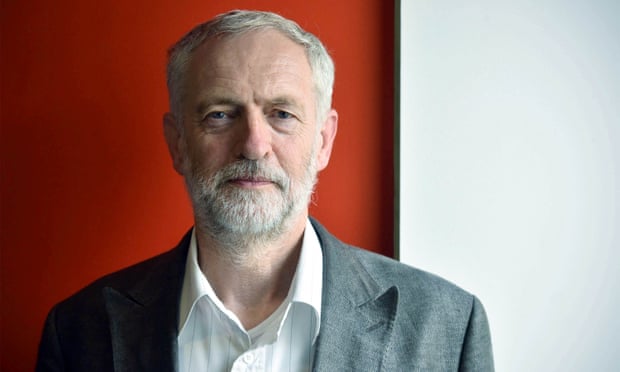
Jeremy Corbyn's opposition to austerity is actually mainstream economics

Labour leadership contender Jeremy Corbyn.
Jeremy Corbyn wins correspondents’ support for voting against the £12bn in cuts in the welfare bill. Photograph: Jeff Overs/BBC/PA
The accusation is widely made that Jeremy Corbyn and his supporters have moved to the extreme left on economic policy. But this is not supported by the candidate’s statements or policies


His opposition to austerity is actually mainstream economics, even backed by the conservative IMF. He aims to boost growth and prosperity. He voted against the shameful £12bn in cuts in the welfare bill.
Despite the barrage of media coverage to the contrary, it is the current government’s policy and its objectives which are extreme. The attempt to produce a balanced public sector budget primarily through cuts to spending failed in the previous parliament. Increasing child poverty and cutting support for the most vulnerable is unjustifiable. Cutting government investment in the name of prudence is wrong because it prevents growth, innovation and productivity increases, which are all much needed by our economy, and so over time increases the debt due to lower tax receipts.
We the undersigned are not all supporters of Jeremy Corbyn. But we hope to clarify just where the “extremism” lies in the current economic debate.
Yours,
David BlanchflowerBruce V Rauner professor of economics, Dartmouth and Stirling, ex-member of the MPC
Mariana MazzucatoProfessor, Sussex
Grazia Ietto-GilliesEmeritus professor, London South Bank University
Advertisement
Malcolm WalkerEmeritus professor, Leeds
Robert WadeProfessor, LSE
Michael BurkeEconomist
Steve KeenProfessor, Kingston University London
Victoria ChickEmeritus professor, UCL
Anna CooteNEF personal capacity
Ozlem OnaranProfessor, Greenwich
Andrew CumbersProfessor, Glasgow
Tina RobertsEconomist
Dr Suzanne J KonzelmannBirkbeck
Tanweer AliLecturer, New York
John WeeksProfessor, SOAS
Marco Veronese PassarellaLecturer, University of Leeds

Dr Judith HeyerEmeritus Fellow, Somerville College, Oxford
Dr Jerome De-HenauSenior lecturer, Open University
Stefano LucarelliProfessor, University of Bergamo
Paul HudsonFormerly Universität Wissemburg-Halle
Mario SeccarecciaProfessor, Ottawa
Dr Pritam SinghProfessor, Oxford Brookes
Arturo HermannSenior research fellow at Istat, Rome
Dr John RobertsBrunel
Cyrus BinaProfessor, Minnesota
Alan FreemanRetired former economist
George IrvinProfessor, SOAS
Susan PashkoffEconomist
Radhika DesaiProfessor, University of Manitoba
Diego Sánchez-AncocheaAssociate professor, University of Oxford
Guglielmo Forges DavanzatiAssociate professor, University of Salento
Jeanette FindlaySenior lecturer, Glasgow
Raphael KaplinskyEmeritus professor, Open University
John RossSocialist Economic Bulletin
Steven HailAdjunct lecturer, University of Adelaide
Louis-Philippe RochonAssociate professor, Laurentian
Hilary WainwrightEditor, Red Pepper
Arturo HermannSenior researcher, ISAE, Rome
Joshua Ryan-CollinsNEF personal capacity
James MedwayLecturer, City University
Alberto PaloniProfessor, Glasgow
Dr Mary RobertonLeeds

‘Beyond irreparable’: UN refugee agency says it’s ‘broke’ and ‘failing’


Syrian refugees look at the convoy of U.N. High Commissioner for Refugees (UNHCR) Antonio Guterres as he visits Al Zaatari refugee camp in the Jordanian city of Mafraq, near the border with Syria, January 15, 2015. © Muhammad Hamed


The outgoing UN high commissioner for refugees has lashed out at a system that has left key international agencies relying on irregular, individual donations from individual countries to combat an “unprecedented” refugee crisis.
“We know that we are not doing enough, we are failing the basic needs of people,” Antonio Guterres, who will leave his post at UNHCR the end of the year, told the Guardian.
“The situation is beyond irreparable. If you look at the number of children who will see their lives so dramatically impacted by malnutrition and lack of psychosocial support, you will see this is already happening.”
UNHCR employs fewer than 9,000 people to look after over 30 million refugees. Four million people have left Syria alone in the past three years.
“If you look at those displaced by conflict per day, in 2010 it was 11,000; last year there were 42,000. This means a dramatic increase in need, from shelter to water and sanitation, food, medical assistance, education.”
The UNHCR budget for 2015 stands at about $5.1 billion, with the US contributing more than all the other countries combined, and with notably small contributions coming from several Middle East states indirectly involved in regional conflicts, such as Saudi Arabia, Qatar and the UAE.
“The budgets cannot be compared with the growth in need. Our income in 2015 will be around 10% less than in 2014. The global humanitarian community is not broken – as a whole they are more effective than ever before. But we are financially broke.”

Guterres says that even regarding Syria, the highest-profile issue of the day, appeals for funding have only resulted in a third of the necessary resources, while for other lingering emergencies that have long left the headlines, such as South Sudan and sub-Saharan Africa, less than 15 percent of the necessary money has been allocated.
In practical terms, this has resulted in cuts to refugee rations for Syrians in Lebanon and Jordan, and Africans in Kenya and Chad, as well as the closure of healthcare clinics in Iraq
But it is the model of constant requests, compromises, and last-minute decisions that Guterres believes is fundamentally detrimental to securing better long-term outcomes for refugees.
“As UN peacekeeping operations are funded by assessed contributions, I think that at least major emergencies like Syria should benefit from assessed contributions that all member states contribute to,” said the 66-year-old.
“If you look at the humanitarian budget all over the world, it is somewhere between $20 billion and $30 billion. I don’t know any bailout of even a medium-sized bank that did not cost more than that. Not to spend more on humanitarian aid is a bad strategy, not to say a suicidal one.”
Migrants eat outside a makeshift refugee camp at the fair ground of Munich, Germany September 7, 2015. © Michaela Rehle
Guterres believes that a lack of proper refugee provisions is partly responsible for the migrant and refugee crisis that will see more than a million people enter Europe seeking asylum by the end of this year.
“It’s a very dramatic situation and it’s clear that because Syrians can’t work legally, and the assistance is not enough, then that is one of the reasons why more people are moving onwards.”
However, the UN also believes Europe should help refugees directly, issuing a statement last week saying the continent could easily house up to 200,000 extra newcomers.
While Guterres’s pleas for more plentiful and steady funding may sound appealing, his opponents are likely to counter that the UN’s budget – when all donations are included – has approximately doubled in the last decade, and quadrupled in the last 20, and would probably also point out that additional funding is not easy to find at present, given the fragile state of the world economy.